

BW Fabrications has many years of experience in designing effective noise control systems for the commercial catering industry
- Many commercial kitchens are located where neighbours or residents may be affected by the noise of extraction fans or the odours released in the extracted air. In these circumstances it is good practice to design a kitchen extraction system which allows these nuisances to be controlled and moderated regardless of whether or not such measures are required under planning conditions.
- As an owner / occupier / user of the premises and commercial kitchen, you have a statutory duty not to cause a nuisance to your neighbours.
- In the case of a commercial kitchen ventilation system nuisance could be caused by the generation of odours or noise
- DEFRA provide useful supporting information see link below
- DEFRA also provide a useful guidance document – (see in documents) which although now officially withdrawn still provides useful background information.
- BWF have extensive experience of designing complaint systems and preparing supporting documentation for your planning submission.
Odour Control
- Modern odour control is usually provided by sue of an electrostatic precipitator (ESP) to remove smoke and grease particles and an ozone injection system to neutralize odours.
- See examples below:


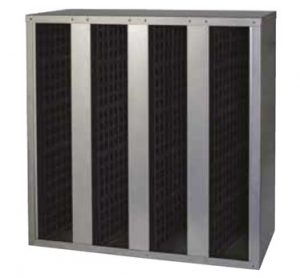
- Simple and more basic odour controls can be achieved with the use of activated carbon filters. See example below;
Noise Control
- Noise Control is achieved by a combination of:
- Appropriate fan selection to try to ensure the fan is as quiet as possible in the first place
- Use of in duct silencers
- Use of acoustic enclosures where “breakout” noise from the casing of the fan is likely to be a problem
- In many cases the acoustic design is targeted to achieve a noise level of 5 dB(A) less than the background noise level at what is termed the “nearest sensitive receptor” which is usually widow of a neighboring dwelling.
- The background noise level in many cases has to be established by a qualified acoustic engineer who will need to carry out a noise impact assessment